 Skip to content
2026 Best Plastic Engineering Solutions for Global Buyers
For global buyers, 2026 will demand more than attractive plastic parts and fast quotations. Reliable plastic engineering solutions must connect material science, precision manufacturing, responsible sourcing, and practical field performance. Buyers need components that survive heat, chemicals, vibration, repeated assembly, and long transport routes. A housing tested beside a factory machine tells a clearer story than a polished brochure.
Experienced engineering teams begin with the application. They review load paths, wall thickness, shrinkage, tolerances, surface finish, and expected service life. Material selection may involve glass-filled polymers, engineering thermoplastics, recycled-content grades, or flame-retardant formulations. Each option brings trade-offs. A lower-cost resin may increase wear, warpage, or rejection rates. That detail is easy to miss.
In 2026, credible suppliers should provide documented testing, dimensional reports, traceability, and clear quality procedures. Certifications can support confidence, but they do not replace independent verification or production samples. Buyers should examine tooling ownership, mold maintenance, inspection frequency, and change-control practices. Supplier audits remain valuable, especially across unfamiliar markets. Small gaps matter.
This guide explores practical solutions for automotive, medical, electronics, industrial, and consumer applications. It also considers design-for-manufacturing decisions that reduce waste without weakening performance. No supplier is perfect. Forecasts change, test conditions differ, and early specifications may prove incomplete. Careful buyers leave room for review. The strongest partnerships welcome questions, disclose limitations, and improve designs through measurable evidence.
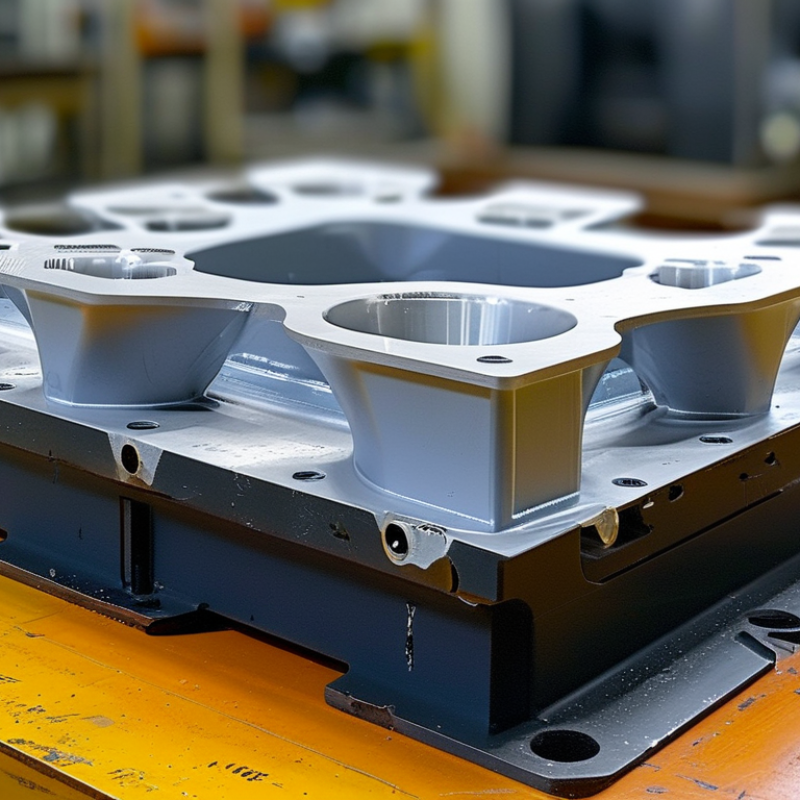
Plastic Engineering Solutions: Definition, Scope, and Core Services
Plastic engineering solutions cover the design, production, testing, and improvement of plastic parts and systems. They connect material science with factory realities. According to the OECD Global Plastics Outlook (2022), global plastic waste reached 353 million tonnes in 2019. That figure changes the engineering brief. A part must meet performance targets and consider its production and end-of-life path. Good engineering begins with use conditions, not a catalog material.
The scope includes material selection, CAD design, mold-flow analysis, prototyping, tooling, process validation, and quality control. Engineers assess heat, chemicals, pressure, impact, moisture, and repeated loading. They also check wall thickness, draft angles, ribs, weld lines, and shrinkage risks. Core services may include design for manufacturing, injection-molding optimization, extrusion support, assembly planning, and laboratory testing. The OECD reported that only 9% of plastic waste was recycled in 2019. Therefore, recycled content, repairability, and material separation deserve early attention. Not every sustainable option performs equally well.
For global buyers, technical documentation matters. A reliable project includes drawings, material certificates, inspection records, and traceable process settings. Production details can expose weak design choices. A thin rib may warp. Moisture can create bubbles. An over-tight tolerance can increase scrap. These problems are ordinary, but they are expensive when discovered late. Engineers should challenge optimistic assumptions and validate performance with real samples, not only simulations. That discipline is useful, although it can slow early decisions.
2026 Best Plastic Engineering Solutions for Global Buyers - Plastic Engineering Solutions: Definition, Scope, and Core Services
| Solution Area | Definition and Scope | Common Materials | Typical Processes | Indicative Engineering Data | Relevant Standards or Tests | Typical Buyer Deliverables |
|---|---|---|---|---|---|---|
| Design for Manufacturability | Converts functional requirements into a plastic part design that can be manufactured consistently, economically, and with controlled risk. | Thermoplastics, thermosets, elastomers, and reinforced polymers. | DFM review, draft analysis, wall-thickness review, rib and boss optimization, tolerance stack-up. | Common injection-molded wall thickness: approximately 1.0–4.0 mm, depending on material, flow length, and part geometry. | ISO 20457 for injection-molded plastic parts; dimensional inspection and design-review records. | 3D CAD model, 2D drawing, material recommendation, manufacturability report, and risk register. |
| Injection Molding | High-volume production of precise plastic components by injecting molten polymer into a cooled mold cavity. | PP, ABS, PC, PA, POM, PBT, PE, TPE, and glass-fiber-reinforced grades. | Single-shot molding, two-shot molding, insert molding, overmolding, and in-mold texturing. | Typical cycle time: approximately 10–60 seconds for many small and medium parts; actual time depends on wall thickness, resin, and cooling requirements. | ISO 20457; ISO 527 tensile testing; ISO 178 flexural testing; dimensional capability studies. | Mold-flow assessment, tool design, first-article samples, process parameters, inspection report, and production-control plan. |
| CNC Plastic Machining | Subtractive manufacturing for prototypes, low-volume parts, tooling components, and tight-tolerance plastic assemblies. | POM, PA, PEEK, PTFE, PVC, acrylic, polycarbonate, and UHMW-PE. | CNC milling, turning, drilling, routing, deburring, and surface finishing. | General dimensional capability is often about ±0.05–±0.20 mm; tighter values require suitable equipment, geometry, inspection, and material control. | ISO 2768 where specified; CMM, optical measurement, surface-roughness, and dimensional inspection. | Machining drawings, material certificates, inspection data, prototype parts, and revision-controlled documentation. |
| Additive Manufacturing | Layer-by-layer fabrication for rapid prototypes, complex geometries, jigs, fixtures, and selected low-volume applications. | Photopolymers, nylon-based powders, TPU, PLA, ABS-like materials, and high-performance polymers subject to machine capability. | Stereolithography, selective laser sintering, fused-filament fabrication, and material jetting. | Common layer heights range from approximately 0.016–0.30 mm, depending on technology, material, and surface-quality requirements. | ISO/ASTM 52900 terminology; ISO/ASTM 52910 design guidance; dimensional and functional validation. | Build orientation, support strategy, prototype samples, material data, post-processing specification, and validation report. |
| Thermoforming | Shapes heated plastic sheet over a mold for large, lightweight, and relatively low-to-medium volume parts. | ABS, HIPS, PETG, PVC, PMMA, PC, PP, and multilayer sheet structures. | Vacuum forming, pressure forming, twin-sheet forming, trimming, and CNC routing. | Typical sheet thicknesses range from approximately 0.5–10 mm; local thinning must be assessed around deep draws and sharp transitions. | Material-specific sheet standards, dimensional inspection, visual inspection, and thickness mapping. | Forming analysis, mold design, trim-line definition, first-off sample, and wall-thickness inspection. |
| Extrusion and Profile Engineering | Continuous production of plastic tubes, sheets, films, seals, channels, and custom profiles with a constant cross-section. | PE, PP, PVC, TPU, TPE, PC, ABS, and engineering polymer compounds. | Single-screw extrusion, twin-screw compounding, co-extrusion, profile calibration, and cut-to-length processing. | Output and dimensional stability depend on die design, melt temperature, cooling, draw-down, and material shrinkage. | ISO 527, ISO 178, ISO 62, and application-specific dimensional and pressure tests. | Profile drawing, die design, compound specification, dimensional control plan, and continuous-production samples. |
| Material Selection and Validation | Matches polymer performance to temperature, chemical exposure, load, moisture, electrical, regulatory, and lifecycle requirements. | Commodity, engineering, high-temperature, flame-retardant, medical-grade, electrically insulating, and reinforced polymers. | Material screening, comparative testing, accelerated aging, chemical compatibility, and failure analysis. | Key variables include tensile strength, elongation, flexural modulus, impact strength, heat-deflection temperature, moisture absorption, and shrinkage. | ISO 527, ISO 178, ISO 180 or ISO 179, ISO 75, ISO 62, and UL 94 where flammability classification is required. | Material-selection matrix, technical data comparison, test plan, compliance documents, and approved material specification. |
| Tooling and Mold Engineering | Develops durable molds, dies, fixtures, and inspection aids that support repeatable production and maintainable lifecycle cost. | Tool steels, pre-hardened steels, aluminum tooling materials, copper alloys, and wear-resistant inserts. | Mold design, cooling-channel planning, gate and runner design, venting, maintenance planning, and tool qualification. | Tool life depends on resin abrasiveness, production volume, mold material, maintenance, cycle conditions, and part geometry. | Mold-flow analysis, dimensional capability studies, preventive-maintenance records, and first-article approval. | Tooling drawings, cavity layout, spare-part list, maintenance schedule, qualification samples, and acceptance checklist. |
| Surface Finishing and Assembly | Improves appearance, protection, usability, identification, and functional integration of plastic components. | Paintable thermoplastics, transparent polymers, elastomers, filled materials, and molded-in decorative surfaces. | Polishing, texturing, painting, printing, laser marking, ultrasonic welding, heat staking, and adhesive bonding. | Bond strength and coating durability depend on surface energy, cleanliness, preparation, cure conditions, and joint design. | ISO 2409 coating adhesion, ISO 9227 salt spray where applicable, visual standards, and joint-strength testing. | Finish standard, color reference, marking artwork, assembly work instruction, bond or weld specification, and inspection criteria. |
| Quality, Compliance, and Supply Support | Controls product conformity, traceability, documentation, packaging, logistics, and change management for international procurement. | Applicable polymer grades, colorants, additives, recycled content, and controlled production materials. | Incoming inspection, in-process control, final inspection, sampling plans, corrective action, packaging, and shipment coordination. | Quality metrics may include dimensional capability, defect rate, lot traceability, on-time delivery, and corrective-action closure time. | ISO 9001; ISO 13485 for applicable medical-device quality systems; ISO 10993 for relevant biocompatibility evaluation; REACH and RoHS where applicable. | Certificate of conformity, inspection report, material certificate, traceability record, packaging specification, change notice, and shipment documents. |
Related Posts
-

2026 Top Plastic Production Methods for Global Buyers
-

How to Create Effective Plastic Product Design for Everyday Use?
-

2026 Best Plastic Injection Molding Techniques for Efficient Manufacturing?
-

Best Custom Plastic Components for Your Global Sourcing Needs?
-

10 Essential Tips for Effective Plastic Assembly Solutions
-
Top Plastic Component Design Trends for 2026 What Buyers Need to Know