Skip to contentCeremonial Matcha Powder is finely ground Japanese green tea made from shade-grown leaves called tencha. Unlike ordinary tea, it is whisked into water and consumed whole. This creates a vivid green drink with a soft, savory flavor, gentle bitterness, and a lingering sweetness.
Tea expert Kevin Gascoyne, co-author of Tea: History, Terroirs, Varieties, explains, “Matcha is unique because the whole leaf is consumed.” That simple observation changes how quality should be judged. Color matters, but it does not tell the entire story. Fresh ceremonial matcha should smell grassy, sweet, and slightly sea-like. Its texture should feel smooth, not sandy.
Preparation is quiet and precise. Sift about two grams into a warm bowl. Add 60–70 milliliters of water near 70–80°C. Whisk quickly with a bamboo chasen until a fine layer of foam appears. Boiling water can flatten its aroma and intensify bitterness. The result should resemble melted jade.
The word “ceremonial” deserves careful attention. It is widely used in international markets, but it is not a universally regulated quality grade. Japanese origin, harvest timing, shading practices, milling method, freshness, and storage often provide stronger clues. Some sellers overstate the label. That deserves reflection.
Ceremonial Matcha Powder can also flavor lattes, desserts, and cold drinks. Yet sweeteners may hide its delicate character. Traditional preparation reveals more. Start with a small serving, observe the aroma, and adjust the water slowly. Perfect foam is not the goal. Honest flavor is.
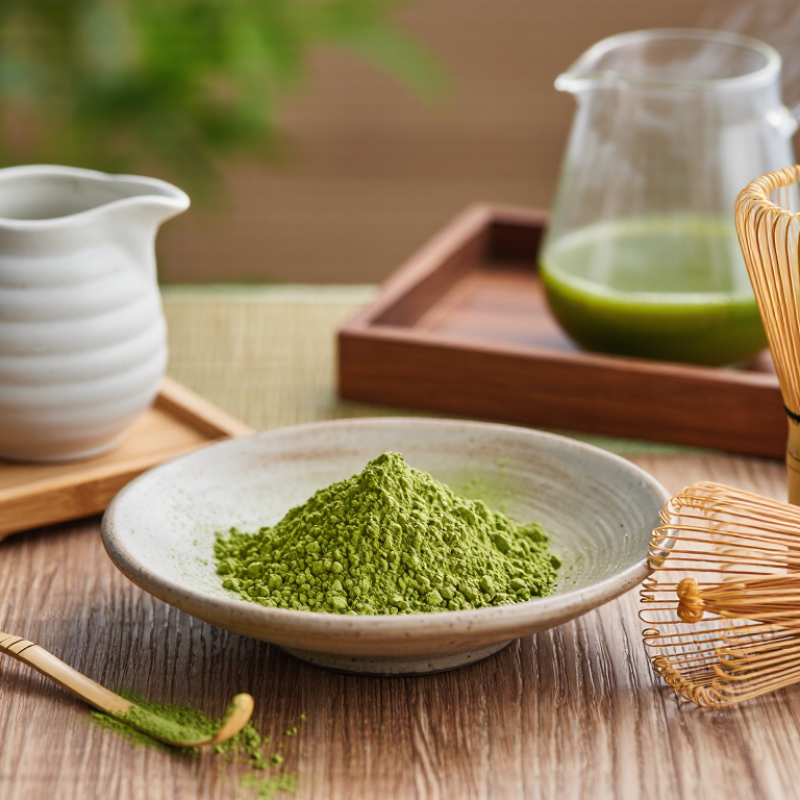
Ceremonial matcha powder usually means finely milled tencha intended for whisking with water. It may taste fresh, sweet, grassy, or lightly bitter. The powder should dissolve into a vivid, smooth suspension, not a clear tea. In practice, users sift about two grams into a bowl, add warm water, and whisk until a fine foam forms. Avoid boiling water. Excess heat can flatten delicate aromas.
“Ceremonial grade” has no universal legal standard. No global regulator defines the term, and sellers may apply it differently. ISO 20715:2023 defines matcha-related identity and production terms, but it does not create a worldwide ceremonial ranking. Therefore, the label alone proves little.
Ask about harvest season, tencha origin, shading period, milling method, and laboratory testing. Color is useful, but it is not decisive.
Japan’s Ministry of Agriculture, Forestry and Fisheries reported green tea export value at approximately ¥36.4 billion in 2023. That figure covers green tea broadly, not matcha alone, yet it shows growing international demand. Market pressure can encourage attractive labels and inconsistent quality.
I would treat “ceremonial” as a marketing description, not a guarantee. A reliable product should provide traceability, ingredient information, storage guidance, and contaminant testing.
It should smell clean when opened, like sweet grass or fresh peas. A dusty, stale, or sharply fishy aroma deserves caution. Even experts can disagree. Taste remains partly personal.
Ceremonial matcha begins as tencha, not ordinary green tea. Growers shade the plants for about 20–30 days before harvest. This reduces direct sunlight and encourages higher chlorophyll and L-theanine levels. The leaves become darker, softer, and less bitter. MAFF’s 2023 tea statistics recorded Japan’s crude tea production at roughly 76,000 tonnes. Only a small portion follows the tencha route. That limited supply partly explains matcha’s higher cost.
After steaming, workers remove stems and veins before drying the leaf. The remaining tencha is slowly ground between granite stones. This process can take about one hour for only 30–40 grams. The powder should feel almost silky between your fingers. Coarse particles often suggest faster industrial milling. Yet texture alone does not prove quality. Harvest date, shading accuracy, storage, and testing also matter. This is where many simple explanations fail.
Tips: Use two grams of powder with 60–70 millilitres of water near 70–80°C. Whisk in a quick W-motion until a fine foam appears. Avoid boiling water. It can flatten the aroma and sharpen bitterness. The International Tea Committee’s recent tea market reporting shows strong global demand for premium green tea, but demand does not guarantee better farming. Taste it carefully. A fresh ceremonial matcha should suggest spinach, sea breeze, and gentle sweetness. Some batches still taste grassy or uneven. That is not always a defect; it may reveal storage age or imperfect milling.
| Dimension | Typical Fact or Range | Why It Matters |
|---|---|---|
| Starting Leaf | Tencha, a shade-grown tea leaf processed without final rolling | Tencha has a flat, leaf-like structure that is suitable for grinding into a fine powder. |
| Shading Period | Approximately 20–30 days before harvest is common for high-quality shaded tea | Reduced sunlight can increase chlorophyll and support a more vivid green color and savory umami character. |
| Harvest Material | Usually young spring leaves and buds, although harvest standards vary | Younger leaves generally produce a softer texture and more delicate flavor than mature leaves. |
| Steaming | Fresh leaves are commonly steamed briefly after harvest | Steaming helps prevent oxidation and preserves the tea’s green color and fresh vegetal notes. |
| Drying and Leaf Preparation | The leaves are dried and sorted; stems and veins are removed to create tencha | Removing tougher plant parts improves the powder’s smoothness and reduces coarse fibers. |
| Stone-Milling | Traditional granite mills grind tencha slowly into a fine powder | Slow milling helps limit heat buildup and produces the characteristic fine texture of traditionally made matcha. |
| Particle Texture | Very fine powder, commonly around 10–20 micrometres for traditionally milled matcha | Small particles disperse more evenly when whisked, although matcha naturally remains a suspension rather than a true solution. |
| Color | Bright or deep green, depending on cultivar, shading, harvest, and processing | Color is a useful visual quality indicator, but it should not be used alone to judge flavor or freshness. |
| Typical Flavor | Umami, grassy, vegetal, mildly sweet, and sometimes slightly bitter | Shade-grown leaves can retain more theanine, contributing to a savory taste and rounded mouthfeel. |
| Meaning of “Ceremonial” | A market term generally associated with matcha intended for drinking plain | The term is not a universally regulated legal grade, so origin, harvest details, freshness, and taste should also be evaluated. |
| Traditional Serving | About 1–2 g of matcha whisked with 60–70 mL of hot water | A bamboo whisk helps suspend the powder and create a fine layer of foam. |
| Water Temperature | Approximately 70–80°C; boiling water is generally avoided | Slightly cooler water can reduce harsh bitterness and better preserve delicate aromas. |
| Whisking Method | Sift the powder, add water, then whisk rapidly in a “W” or “M” motion | Sifting reduces clumps, while rapid whisking creates a smoother and more aerated drink. |
| Common Modern Uses | Straight whisked tea, lattes, smoothies, desserts, and savory recipes | Drinking it plain highlights quality, while milk, sweeteners, and food ingredients create a milder flavor profile. |
| Caffeine | Contains caffeine; the amount varies with serving size, cultivar, harvest, and preparation | Because the powdered leaf is consumed rather than infused and discarded, matcha can provide more caffeine than some steeped teas. |
| Storage | Store airtight, away from light, heat, moisture, and strong odors; refrigerate after opening if well sealed | Matcha is sensitive to oxygen, light, heat, and moisture, which can dull its color and fresh aroma. |
| Freshness Indicators | Vivid green color, fresh vegetal aroma, and a smooth, balanced taste | A dull yellow-green appearance, stale smell, or pronounced harshness may indicate age or poor storage. |
Ceremonial matcha is a finely ground green tea powder prepared for whisking with water. It usually has a bright color, soft aroma, and smooth texture. The word “ceremonial” can sound scientific, but it is not a universal legal grade. Quality still depends on harvesting, shading, processing, storage, and freshness.
Its chemistry deserves closer attention. Ceremonial matcha commonly provides about 19–44 mg of caffeine per gram of powder. A 1–2 gram serving may therefore contain roughly 19–88 mg of caffeine. Actual levels vary between batches and preparation methods. Matcha also contains L-theanine and catechins, which may create a steadier feeling than coffee for some people. That effect is not guaranteed. Caffeine sensitivity, sleep habits, body size, and an empty stomach all matter. The powder is consumed whole, so matcha can deliver more tea compounds than a strained infusion.
Tips: Use a kitchen scale for a clearer estimate. Start with 1 gram, then whisk it with 60–70 milliliters of warm water. Avoid boiling water, which can flatten delicate aromas and increase bitterness.
Examine the color and smell before drinking. Dull green powder or a stale, hay-like scent may suggest poor storage. I would not treat caffeine numbers as exact; laboratory testing and serving size can differ. Keep the container sealed, cool, and away from light. Insomnia is a useful warning sign.
What Is Ceremonial Matcha Powder and How Is It Used?
Ceremonial matcha is finely milled green tea powder made from shade-grown leaves. It is traditionally prepared with water, not mixed into milk or sweeteners. The term “ceremonial” has no universal legal grading standard, so quality claims require careful judgment. Grand View Research estimated the global matcha market at about USD 2.3 billion in 2023, showing strong consumer interest. Market growth does not guarantee better flavor.
How to Whisk It: 1–2 g with 60–70 mL at 70–80°C
Sift 1–2 grams into a warm bowl. This breaks small clumps before they become stubborn. Add 60–70 milliliters of water at 70–80°C. Boiling water can make the drink taste sharp and overly bitter. Hold the bowl firmly, then whisk quickly in a W-shaped motion with a bamboo whisk. Keep your wrist loose. Aim for a fine, even foam rather than large bubbles.
Look for a bright green surface and a smooth, savory aroma. The texture should feel soft, though some slight graininess may remain. That is not always a defect. Freshness, milling quality, and storage matter greatly. Japan’s Ministry of Agriculture, Forestry and Fisheries reported Japanese green-tea production at roughly 77,400 tonnes in 2023, but only part of that output becomes matcha. I still find the 1-gram measure easier for beginners; 2 grams can taste intense in a small bowl.
Ceremonial matcha powder is usually made from young, shade-grown tea leaves, carefully ground into a fine, vivid green powder. The term “ceremonial” is not a universal legal grade, so quality still depends on harvesting, processing, storage, and freshness. Good matcha should smell fresh and grassy, not dusty or stale. Its flavor can include spinach-like sweetness, gentle bitterness, and umami. Sift 1–2 grams into a bowl before adding warm water. Water around 70–80°C helps protect its softer flavor. Boiling water often makes the cup harsh. Whisk until a light foam forms.
Matcha also works well beyond tea. For a latte, dissolve 1–2 grams with a small amount of warm water, then add steamed milk. Oat, dairy, and soy milk each change the texture. Baking needs more care. Start with 1–2 teaspoons for a small batch of cookies, sponge cake, or shortbread. Too much powder can create a dry, seaweed-like bitterness. I have found that sugar and vanilla soften matcha, while citrus can make its green notes brighter. The color may fade in high heat, even when the flavor remains. Matcha contains caffeine, so culinary portions still count toward daily intake. Weighing the powder gives better consistency than using a crowded teaspoon. My first instinct was to add more for stronger color, but that usually damaged the flavor. Freshness matters more than intensity.