 Skip to content
China Top Car Wiring Harness Duct Machine Manufacturer?
Choosing China’s top Car Wiring Harness Duct Machine manufacturer takes more than comparing price lists. The right supplier should understand the real work: feeding duct consistently, cutting cleanly, and handling different lengths without repeated operator adjustments. Small details matter. A rough cut can slow assembly. A drifting feed can create avoidable scrap. Buyers should ask for sample runs using their own duct materials and dimensions, then inspect the results.
Taiichi Ohno, a manufacturing expert associated with the Toyota Production System, said, “Without standards, there can be no improvement.” This was a broader production principle, not a statement about duct machines specifically. Still, it offers a useful test: can a supplier explain how machine settings, output checks, and maintenance routines are controlled? Look for clear specifications, practical training, responsive technical support, and evidence from comparable installations. A polished brochure is not enough.
This guide explores how to compare Chinese manufacturers, assess machine capabilities, and ask better questions before purchasing. It also considers where automation helps—and where it may not. One uncomfortable point deserves attention: the “best” machine on paper can be the wrong choice for a factory’s actual duct sizes, production volume, or staffing. There is no universal winner. Real samples, transparent communication, and a careful review of operating needs provide a more dependable basis for selection.
What Is a Car Wiring Harness Duct Machine?
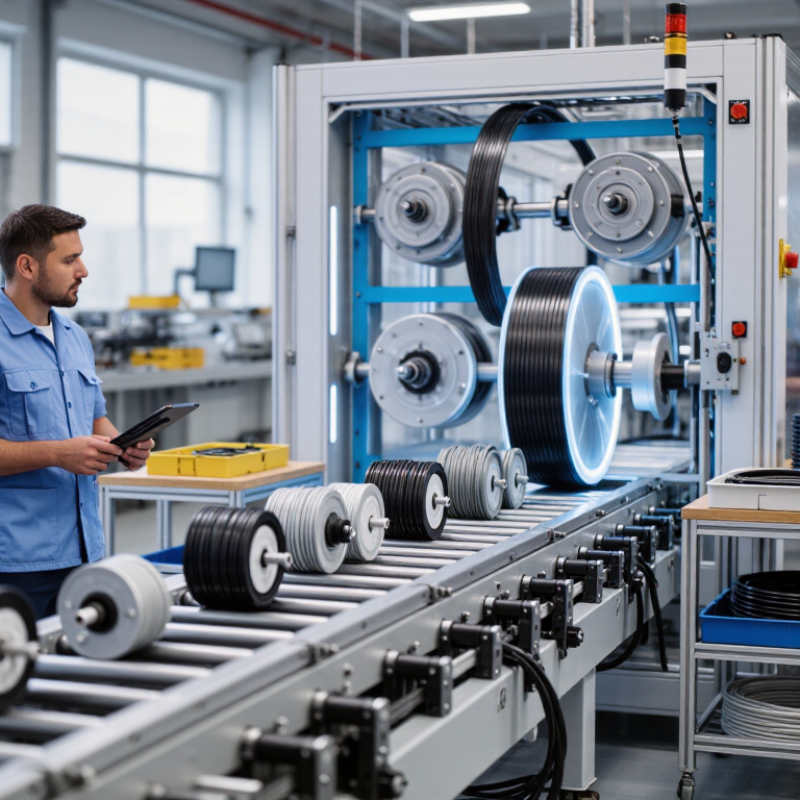
A car wiring harness duct machine is equipment used to make or finish protective channels that organize electrical wires inside a vehicle. The duct helps keep wire bundles separated from sharp edges, moving parts, and sources of heat. Depending on its design, a machine may feed plastic profiles, cut them to length, punch openings, or shape sections for installation. It processes the duct, not the electrical harness itself.
A typical workflow starts with a plastic strip or formed profile. Feed rollers guide it through cutting and punching stations, while sensors and fixtures help maintain consistent dimensions. An operator may check cut length, slot position, and edge quality with a ruler or sample gauge. A rough edge can snag insulation; a misplaced opening can complicate assembly. Small errors travel. Machine settings should match the duct material and drawing, since heat and feed speed can affect the finish. In practice, setup records are not always complete, so a first-piece inspection is important. That step takes time, but it can reveal problems before a full batch is processed.
China Top Car Wiring Harness Duct Machine Manufacturer? – What Is a Car Wiring Harness Duct Machine?
| Data Dimension | Typical Information | What to Verify |
|---|---|---|
| Machine definition | Equipment used to process protective ducts or conduits for automotive wiring harnesses. Depending on the setup, it may cut, slit, feed, or otherwise prepare ducting for harness assembly. | Confirm which operations are included; “duct machine” can refer to different equipment configurations. |
| Typical duct materials | Automotive ducts and conduits may use materials such as polypropylene (PP), polyamide (PA/nylon), or other specified plastics. Material choice depends on the component’s design and service conditions. | Check compatibility with the exact material, wall construction, flexibility, and temperature requirements in the part specification. |
| Common processing operations | Depending on the machine, operations can include length cutting, end trimming, longitudinal slitting, or handling and feeding of duct sections. | Request a process description and sample parts that demonstrate every required operation. |
| Input and output | Inputs may be supplied as coils, continuous lengths, or pre-cut sections. Outputs are processed duct pieces prepared for the next harness-assembly step. | Confirm loading method, part presentation, scrap handling, and how finished pieces are collected. |
| Cutting and dimensional quality | Cut length, end condition, and slit position are controlled according to the part drawing and production specification. Required tolerances vary by component and application. | Agree on measurable acceptance criteria and verify them with production samples; do not assume one tolerance applies to all ducts. |
| Automation options | Depending on the design, equipment may use manual loading, powered feeding, programmed length settings, sensors, or automated collection. | Compare the actual automation scope, changeover method, operator involvement, and fault recovery procedure. |
| Production rate | Output depends on duct geometry, material, cut length, feeding method, handling time, and inspection requirements. There is no single production rate that applies to every setup. | Request a cycle-time trial using the intended material and representative part lengths. |
| Tooling and changeover | Guides, cutting tools, fixtures, or feed settings may need adjustment when duct dimensions or product designs change. | Check tooling life, replacement availability, changeover steps, and whether adjustments require special tools. |
| Safety and maintenance | Cutting equipment should include suitable guarding and safe operating procedures. Routine maintenance may include inspection of cutting components, guides, and feed mechanisms. | Review the risk assessment, guarding, emergency-stop arrangements, maintenance instructions, and operator training requirements. |
| Manufacturer evaluation | A suitable manufacturer should be able to explain the machine’s process, provide technical documentation, and demonstrate performance on the customer’s specified duct. | Evaluate drawings, acceptance tests, service support, spare parts, delivery scope, and references relevant to the required process. |
| Selecting a machine | Selection should be based on the duct material and dimensions, required operations, target output, quality criteria, available floor space, and plant utilities. | Share part drawings and sample material, then compare proposals against the same acceptance criteria and operating conditions. |
Note: Machine functions and performance vary by configuration. Confirm specifications and acceptance criteria with the supplier using the intended production material and parts.