How to Choose the Best Plastic Tooling Solutions for Your Project?
Choosing the right plastic tooling solutions for your project can be daunting. This industry requires in-depth knowledge and experience. According to expert James Holloway, “Investing in the right tooling saves time and money in the long run.” This emphasizes the importance of making informed decisions.
Understanding the specific needs of your project is crucial. Factors such as material type, complexity, and production volume play significant roles. It’s not just about costs; durability and quality are vital too. Poor choices can lead to delays and increased expenses. You should reflect on these details before proceeding.
Different projects require different approaches to plastic tooling solutions. The right expertise can guide you through this process. Collaboration with skilled professionals can dramatically impact your project's success. Every project presents unique challenges that must be addressed. Careful analysis now can save headaches later.

Understanding Plastic Tooling: Key Concepts and Terminology
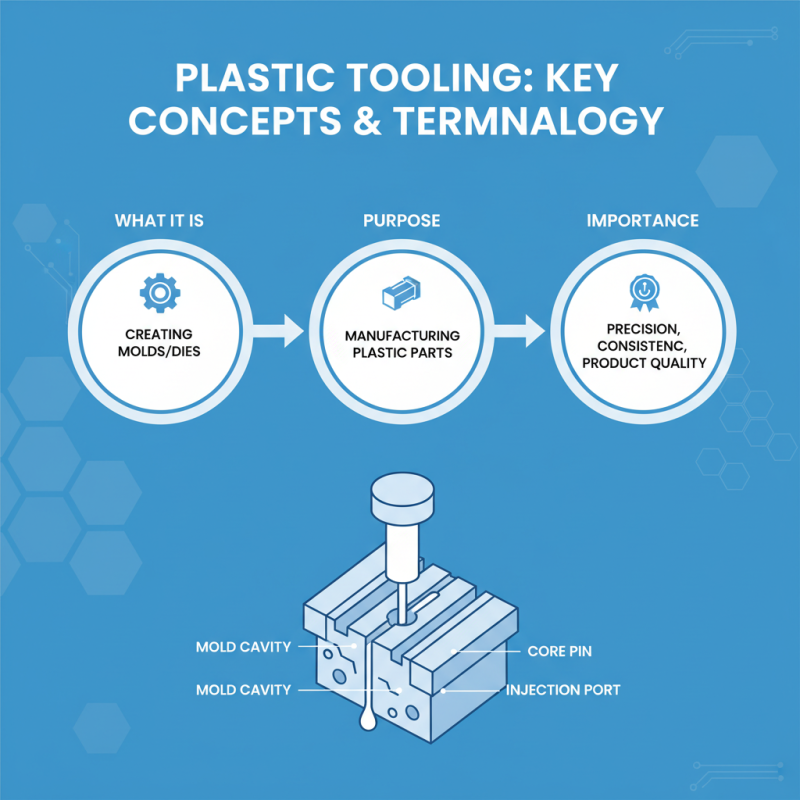
Understanding plastic tooling involves grasping essential concepts and terminology. Plastic tooling refers to the process of creating molds or dies used in manufacturing plastic parts. These molds are crucial in achieving precision and consistency in production. A well-designed tool can greatly influence the quality of the final product.
Key terminology includes "Cavity" and "Core." The cavity is the hollow part of the mold, shaping the outside of the component. The core creates the interior features. It's vital to know the difference, as both contribute to the final design. Additionally, "Cycle Time" is significant, as it refers to the time taken to produce one part. Shorter cycle times lead to higher efficiency, but they should not compromise quality.
Another important aspect is "Material Selection." The type of plastic used affects durability, texture, and cost. Different materials may require different tooling techniques. Consider how these factors might impact your project. It's common for designers to overlook these details in early stages. Focusing on these terms and their implications can guide more informed choices.
Assessing Project Requirements: Material, Design, and Functionality
Choosing the right plastic tooling solution hinges on three critical aspects: material, design, and functionality. Understanding these requirements can significantly impact the project's success. According to a recent study by the Society of Plastics Engineers, nearly 60% of project delays stem from material mismatches. Selecting the right resin type is vital. For instance, ABS offers great machinability, while polycarbonate excels in impact resistance. Knowing these properties helps in making informed decisions.
Design is also crucial. A well-thought-out design can enhance manufacturing efficiency. It should account for the chosen material's characteristics. A report by the American Society for Testing and Materials states that optimal tooling designs can reduce production costs by as much as 30%. However, complexity in designs may lead to unforeseen challenges, such as increased lead times and costs. Therefore, it's essential to evaluate design intricacies against practical manufacturability.
Functionality relates to the end-use of the product. It is critical to ensure that the tooling can produce parts that meet performance requirements. Industry insights show that about 50% of failures arise from a lack of functional testing early in the design phase. Conduct thorough assessments and prototypes to verify that the product's capabilities meet the intended application. Balancing these requirements requires both a strategic approach and willingness to adjust as new information arises.
Evaluating Different Plastic Tooling Methods and Their Applications
When evaluating plastic tooling methods, it’s important to consider various factors. Different methods cater to distinct project needs. Injection molding is a common choice for mass production. It offers precision and repeatability, which many designs require. However, tooling costs can be high. Low-volume projects might find this approach overwhelming financially.
Another option is 3D printing. This method allows for rapid prototyping and iteration. It can be beneficial during early project stages. Yet, the surface finish might not be ideal for all applications. You may need additional post-processing to achieve the desired quality. Understanding these limitations is crucial for effective decision-making.
Thermoforming is another viable option, especially for larger parts. It allows for shorter lead times. However, the complexity of the part design greatly influences the tooling cost. If you’re working with intricate designs, traditional methods may offer more reliability. Balancing these factors can lead to better project outcomes. Each method presents unique challenges, requiring careful consideration and planning.
Comparison of Plastic Tooling Methods
This chart compares the cost per unit of various plastic tooling methods commonly used in manufacturing. Injection molding is a cost-effective option for high-volume production, while 3D printing serves as a versatile but more expensive alternative suited for prototyping and lower volume runs.
Choosing the Right Manufacturer: Expertise, Capabilities, and Costs
When selecting a manufacturer for plastic tooling, experience plays a vital role. An experienced provider understands the nuances of materials and processes. They have faced various challenges and can navigate unexpected issues effectively. This background gives them an edge in producing high-quality tooling solutions. However, not all experienced manufacturers guarantee success. It’s crucial to verify their track record with projects similar to yours.
Capabilities are another key factor. Assess a manufacturer’s technology and machinery. Advanced equipment can enhance precision and efficiency. Look for facilities that utilize the latest production techniques. Despite this, a sophisticated setup alone doesn’t ensure quality. Communication and collaboration are equally important. A manufacturer should actively engage with you throughout the project, understanding your specific needs and preferences. If they fail to listen, it could lead to misalignment in expectations.
Cost is a significant consideration, but it should not be the sole focus. While finding a competitive price is essential, a lower cost does not always mean better value. Weigh the trade-offs between cost, quality, and service. Sometimes, investing in a higher-priced service can save money in the long run by reducing errors and rework. Evaluate all factors holistically for a more informed decision.
Best Practices for Maintenance and Quality Control in Tooling Solutions
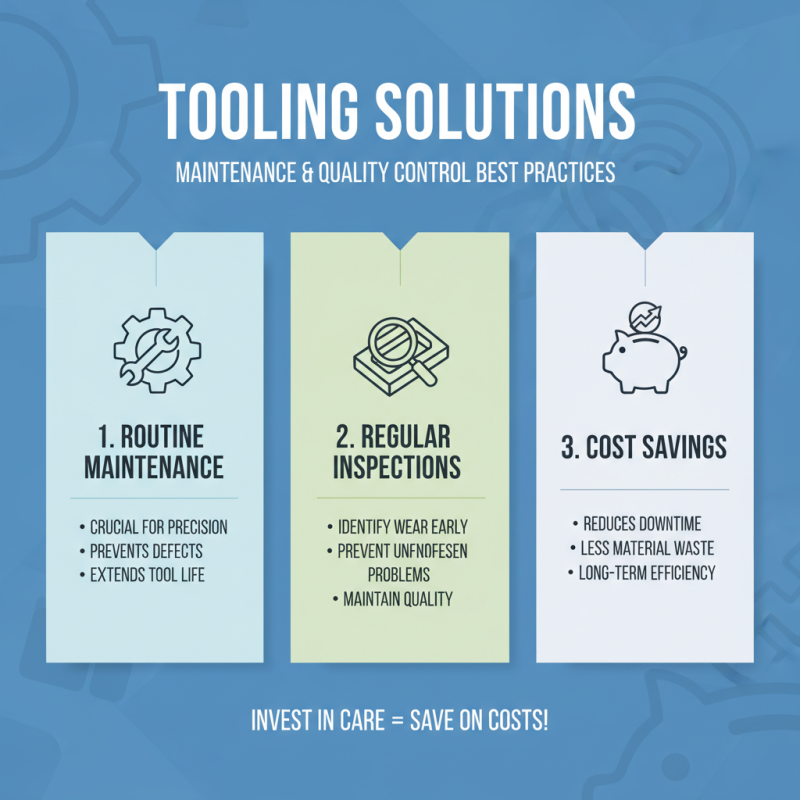
When selecting plastic tooling solutions, maintenance and quality control cannot be overlooked. Regular maintenance is crucial. Neglecting this can lead to unforeseen problems. For instance, worn-out molds can affect precision and lead to defects. A routine inspection schedule helps identify wear and tear early. Investing time in maintenance can save costs in the long run.
Quality control should be an integral part of your tooling process. Documenting every step in production ensures consistent outcomes. Implementing statistical process controls (SPC) can help monitor tool performance. Continuous feedback loops allow for real-time adjustments. However, it’s important to acknowledge that sometimes, despite best efforts, variations do occur. This calls for a responsive approach in troubleshooting.
Training staff in quality assurance techniques is vital. Even minor mistakes can lead to significant issues. Encouraging a culture of accountability ensures everyone is invested. Regular training sessions can reinforce best practices. Remember, even the best tooling solutions require a commitment to maintenance and quality. Over time, this diligence builds reliability in your projects.
 Skip to content